Optimise Aminoglycoside Use in Clinical Practice
Enhance your understanding of aminoglycosides, their uses, dosing, and stewardship in clinical care.
577 enrolled on this course

Duration
3 weeksWeekly study
3 hours100% online
How it works
Optimise Aminoglycoside Use in Clinical Practice
Explore aminoglycoside use in clinical practice with safe and effective methods
Aminoglycosides are a powerful class of antibiotics commonly used to treat severe infections.
On this three-week course, build your foundational understanding of how these antimicrobials work, when and how to use them, and how to monitor patients effectively.
Explore how aminoglycosides work and when to use them
Begin by investigating the mechanisms of aminoglycosides and the bacterial infections they are designed to treat.
You’ll review clinical indications, including empirical therapy, monotherapy, and prophylactic use, as well as risks and potential adverse effects.
Through case studies and real-world applications, you’ll contextualise their clinical relevance.
Master dosing, pharmacokinetics, and therapeutic monitoring
Take a deeper dive into pharmacokinetics and pharmacodynamics, focusing on effective dosing strategies and therapeutic drug monitoring (TDM).
You’ll explore how gentamicin and other aminoglycosides are administered and adjusted in real clinical settings, ensuring both efficacy and safety.
Apply aminoglycoside strategies in special patient groups
The final week focuses on optimising aminoglycoside use across diverse patient populations, including those with renal impairment, neonates, older adults, pregnant patients, and those with extreme body weight.
You’ll also consider resistance mechanisms and stewardship strategies to ensure responsible antimicrobial use.
Syllabus
Week 1
Introduction to Aminoglycosides


Welcome to the course
This first activity introduces you to the course and educators and provides some useful tools for use during the course.

Introduction to aminoglycosides
Introduces the aminoglycosides and their general uses. This activity additionally highlights how aminoglycosides work and the bacteria they are effective against.

Clinical use of aminoglycosides
Explores, in greater detail, the clinical uses of aminoglycosides, highlighting how they can best be utilised in empirical therapy, combination therapy, and as prophylactic agents. Their risks/side effects are also explored.

End of Week 1
Summarises information from all topics presented throughout this week.
Week 2
Dosing and Monitoring Aminoglycosides

Understanding the Pharmacokinetics of Aminoglycosides
Addresses general drug pharmacokinetics and, more specifically, the pharmacokinetics of aminoglycosides. The efficacy of aminoglycosides are also explored.

Calculating Doses
Considers dosing regimens for the antibiotics of the aminoglycosides class, analysing the benefits of daily vs TDS dosing in the context of efficacy and toxicity.

Dosing in Sepsis
Explores the topic of calculation of doses for aminoglycoside antibiotics, looking specifically at how to do so in cases of sepsis and using creatinine clearance.

Therapeutic Drug Monitoring
Introduces how measurements of serum levels can be taken and used in therapeutic drug monitoring of prescribed aminoglycosides. Additionally highlights the issues associated with interpreting results and monitoring in practice.

End of Week 2
Summarises information from all topics presented in the Week.
Week 3
Aminoglycosides in Special Patient Groups

Aminoglycoside Pharmacokinetics: Renally Impaired
Explores the impact of renal impairment on aminoglycoside pharmacokinetics, providing dosing guidance in cases of general renal impairment.

Aminoglycoside Pharmacokinetics: Extremes of Age
Assesses the impact of extremes of age on aminoglycoside pharmacokinetics, identifying clinical strategies required when managing neonates and children, as opposed to elderly patients.

Aminoglycoside Pharmacokinetics: Extremes of Weight
Highlights the impact of extremes of weight on aminoglycoside pharmacokinetics, identifying clinical strategies required when managing underweight patients, as opposed to overweight patients.

Aminoglycoside Pharmacokinetics: Pregnancy
Explores the physiological changes seen in pregnancy, highlighting how such changes affect aminoglycoside pharmacokinetics, and require careful clinical strategies which ensure efficacy as well as safety.

Aminoglycoside Pharmacokinetics: Other Scenarios
Takes a look at how aminoglycoside pharmacokinetics differ in other clinical scenarios.
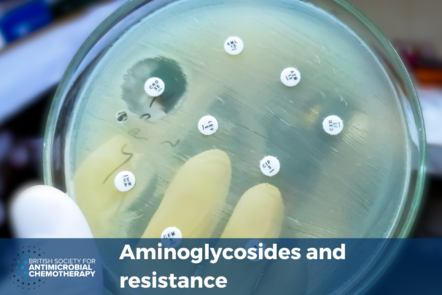
Aminoglycosides and Resistance
Highlights mechanisms of resistance to aminoglycosides, and contextualises this example of AMR within healthcare settings with regards to the clinical implications.

End of Week 3
Summarises information from all topics presented in the week.
Who is this accredited by?

The CPD Certification Service was established in 1996 and is the leading independent CPD accreditation institution operating across industry sectors to complement the CPD policies of professional and academic bodies.
The Royal College of Pathologists is a professional membership organisation with charitable status, concerned with all matters relating to the science and practice of pathology.
When would you like to start?
Start straight away and join a global classroom of learners. If the course hasn’t started yet you’ll see the future date listed below.
Available now
Learning on this course
On every step of the course you can meet other learners, share your ideas and join in with active discussions in the comments.
What will you achieve?
By the end of the course, you‘ll be able to...
- Demonstrate an understanding of how aminoglycosides work, what bacteria they are effective against and their mechanism of action
- Identify the clinical conditions in which these antimicrobials are used and their risks/side effects
- Describe how genetic testing can be used to identify patients at increased risk of developing side effects
- Explain key PK and PD parameters and how they are related to aminoglycoside action and efficacy
- Summarise how aminoglycoside dosing is calculated using the Cockcroft-Gault equation and appreciate the different patient groups where dosing calculations may differ
- Describe the importance of TDM when administering aminoglycosides and associated challenges when interpreting results
- Describe the effects of renal impairment, age, weight, pregnancy and other important clinical scenarios on aminoglycoside dosing and use
- Summarise the key ways microorganisms become resistant to aminoglycosides and explain the clinical implications of such resistance
Who is the course for?
This course is aimed at healthcare professionals interested in the clinical application of aminoglycosides, including dosing, monitoring, and stewardship.
Who will you learn with?

I am the regional antimicrobial stewardship lead for the East of England NHSE. Previously I have worked as an AMS pharmacist in acute, community and primary care settings.
Who developed the course?

BSAC
Founded in 1971, the British Society for Antimicrobial Chemotherapy is committed to addressing the growing threat of drug resistant infections around the world.
Endorsers and supporters
funded by

Ways to learn | Buy this course | Subscribe & save | Start learning today |
|---|---|---|---|
| Choose the best way to learn for you! | $79/one-off payment | $335.99 for a whole year Automatically renews | Free |
| Fulfill your current learning need | Develop skills to further your career | Try this course - with limits | |
| Access to this course | tick | tick | Limited to 3 weeks |
| Access to 1,000+ courses | cross | tick | cross |
| Learn at your own pace | tick | tick | cross |
| Discuss your learning in comments | tick | tick | tick |
| Certificate when you're eligible | Printed and digital | Digital only | cross |
Cancel for free anytime |
Ways to learn
Choose the best way to learn for you!
Subscribe & save
$335.99 for a whole year
Automatically renews
Develop skills to further your career
- Access to this course
- Access to 1,000+ courses
- Learn at your own pace
- Discuss your learning in comments
- Digital certificate when you're eligible
Cancel for free anytime
Buy this course
$79/one-off payment
Fulfill your current learning need
- Access to this course
- Learn at your own pace
- Discuss your learning in comments
- Printed and digital certificate when you’re eligible
Start learning today
Free
Try this course - with limits
- Limited to 3 weeks
Find out more about certificates, Unlimited or buying a course (Upgrades) Sale price available until 2 November 2026 at 23:59 (UTC). T&Cs apply. | |||
Find out more about certificates, Unlimited or buying a course (Upgrades)
Sale price available until 2 November 2026 at 23:59 (UTC). T&Cs apply.
Learning on FutureLearn
Your learning, your rules
- Courses are split into weeks, activities, and steps to help you keep track of your learning
- Learn through a mix of bite-sized videos, long- and short-form articles, audio, and practical activities
- Stay motivated by using the Progress page to keep track of your step completion and assessment scores
Join a global classroom
- Experience the power of social learning, and get inspired by an international network of learners
- Share ideas with your peers and course educators on every step of the course
- Join the conversation by reading, @ing, liking, bookmarking, and replying to comments from others
Map your progress
- As you work through the course, use notifications and the Progress page to guide your learning
- Whenever you’re ready, mark each step as complete, you’re in control
- Complete 90% of course steps and all of the assessments to earn your certificate
Want to know more about learning on FutureLearn? Using FutureLearn
Do you know someone who'd love this course? Tell them about it...
More courses you might like
Learners who joined this course have also enjoyed these courses.


Browse more in Healthcare & Medicine and Science, Engineering & Maths
