• University of Reading

Heart Health: A Beginner's Guide to Cardiovascular Disease

Learn more about how your heart works, the causes of heart disease and how to keep your heart healthy.

67,918 enrolled on this course

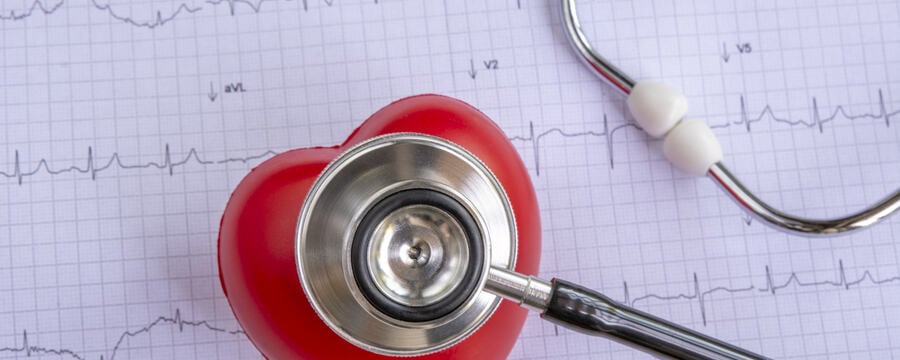
Medical stethoscope and red heart with cardiogram

Heart Health: A Beginner's Guide to Cardiovascular Disease

67,918 enrolled on this course

  • 4 weeks

  • 5 hours per week

  • Digital certificate when eligible

  • Open level

Find out more about how to join this course

  • Duration

    4 weeks
  • Weekly study

    5 hours
  • Languages

    English, Italiano, Español, Français, PortuguêsEnglish, Italiano
  • 100% online

    How it works
  • Unlimited subscription

    $335.99 for a whole yearLearn more

Understand cardiovascular disease and learn how to keep your heart healthy

Your heart beats around 100,000 times a day, pumping blood around your body to deliver oxygen and nutrients, while taking away waste products. When your heart is unhealthy, it can’t perform this vital task so effectively.

This course will improve your knowledge of how the heart works, the causes of cardiovascular diseases such as heart attacks, strokes, high blood pressure and heart failure and what you can do to avoid them.

You’ll cover both theory and practical aspects of heart health, learning from lab demonstrations and practical activities so you better understand your own heart.

Download video: standard or HD

Skip to 0 minutes and 2 seconds My name is Dr. Natasha Barrett, and I’m a lecturer at the University of Reading

Skip to 0 minutes and 5 seconds and also the lead educator for Heart Health: A Beginner’s Guide to Cardiovascular Disease. It’s likely that you know someone who’s been affected by cardiovascular disease. Cardiovascular biology is an important area of research at the University of Reading, and we’re lucky to have many experts in the field. As such, this gives you a taster of what it would be like to study at Reading. So by the end of this course, you should have developed a better understanding of the structure and function of the cardiovascular system, an understanding of the basis of several cardiovascular diseases, including heart attacks, strokes, heart failure, and hypertension.

Skip to 0 minutes and 43 seconds You’ll also gain several skills, such as the ability to apply theoretical knowledge in practical situations, the ability to analyse and process data, the ability to research a topic and question the reliability of your sources. And, of course, you’ll develop communication skills through sharing your ideas and discussing them with others. Practical work aims to apply the theory that you’ve already learnt. And this helps deepen your level of understanding. I hope that you enjoy both this course and finding out about cardiovascular research at the University of Reading.

Syllabus

  • Week 1

    Cardiovascular anatomy and physiology

    • Welcome to Week 1

      Find out more about what you'll be learning this week, who will be guiding you and how the course is taught.

    • Blood and the circulatory system

      Explore the circulatory system and the transport network it provides to and from the lungs and tissues.

    • Anatomy and function of the heart

      Learn about the importance of the heart's anatomy and function, then apply theory through an optional heart dissection home practical.

    • Starting a food and activity diary

      Get started with your food and activity diary to help you investigate the lifestyle risk factors cardiovascular disease.

    • Meet the expert

      Get to know more about Dr Sam Boateng and Tyler Horn, a PhD student at the University of Reading, and some of the reasons why they chose to study heart health.

    • Review and Reflect

      Reflect on what you've learnt this week about the healthy heart and circulatory system, then assess your knowledge with an end of week quiz.

  • Week 2

    Angina, heart attacks and strokes

    • Welcome to Week 2

      Find out what you'll cover this week and discuss some facts and figures relating to how women and men are differently effected by cardiovascular disease.

    • Atherosclerosis and angina

      Watch Professor David Leake talk about the affect atherosclerosis and angina have on the circulatory system and how these conditions can be diagnosed and treated.

    • Haemostasis and thrombosis

      Learn about the chemical reactions that cause blood to clot, and how this can negatively impact the circulatory system in an unhealthy body in a home practical.

    • How blood clots

      Watch a demonstration to see how blood clots and try a home practical to explore how thrombosis affects blood flow.

    • Heart attacks and strokes

      Watch as Professor Jon Gibbins and Professor David Leake explain the reasons heart attacks and strokes occur, symptoms, survival statistics and possible treatment.

    • Research, evaluate and share

      Share your findings and discuss the reliability of the content sources mentioned last week.

    • Meet the expert

      Meet with Dr Craig Hughes and Dr Alice Pollitt to hear about their research on heart health.

    • Review and Reflect

      Reflect on what you've learnt about cardiovascular diseases and conditions that can affect the heart, and assess your knowledge with an end of week quiz.

  • Week 3

    Heart failure, hypertension, valvular disease and arrhythmias

    • Welcome to Week 3

      Find out you'll cover this week and discuss facts and figures relating to them.

    • Heart failure

      Find out about the main causes and alarming stats surrounding the topic of heart failure and apply your learning in a home practical.

    • Hypertension, valvular disease and arrythmias

      Learn about hypertension, valvular disease and arrythmias, and discuss your thoughts on the introduction of defibrillators in public places.

    • Research, evaluate and share

      Share your findings and discuss the reliability of reportage sources surrounding heart failure, blood pressure and arrhythmias.

    • Meet the expert

      Meet Professor Jon Gibbins and Dr Parveen Yaqoob OBE as they discuss their research on heart health.

    • Review and Reflect

      Reflect on what you've learn this week about heart failure, hypertension, valvular disease and arrhythmias and assess your knowledge with an end of week quiz.

  • Week 4

    Risk factors and prevention

    • Welcome to Week 4

      Read an overview of the topics you'll cover this week and share your views on what lifestyle choices can be made to reduce the risk of cardiovascular disease.

    • Non-modifiable and semi-modifiable risk factors

      Learn about some non-modifiable and semi-modifiable risk factors that can cause cardiovascular disease including: age, gender and genetics.

    • Modifiable risk factors

      Learn about the factors that can be adjusted in your life to reduce risk of heart disease such as giving up smoking, lowering your cholesterol and dietary intake.

    • Lifestyle modifications

      Learn how nutrition and physical inactivity impacts heart health and analyse your food and activity diary results with Dr Natasha Barrett.

    • Research, evaluate and share

      Share your findings and discuss the reliability of reportage sources surrounding cardiovascular risk and prevention.

    • Meet the expert

      Meet Dr Chris Jones and PhD student Kaouthar and hear about their research on heart health.

    • Review and reflect

      Take a final quiz, reflect on what you've learnt throughout the course about heart health and explore opportunities for further study at the University of Reading.

When would you like to start?

Start straight away and join a global classroom of learners. If the course hasn’t started yet you’ll see the future date listed below.

  • Available now

Learning on this course

On every step of the course you can meet other learners, share your ideas and join in with active discussions in the comments.

What will you achieve?

By the end of the course, you‘ll be able to...

  • Describe the structure and function of the cardiovascular system, including the circulatory system and heart
  • Describe the basis of several cardiovascular diseases including heart attacks, strokes, hypertension and heart failure
  • Evaluate the various risk factors that can contribute towards increasing a person’s risk of cardiovascular disease
  • Discuss some of the lifestyle choices that we can make to try and reduce our risk of cardiovascular disease
  • Apply theoretical knowledge and investigate a topic through practical activities
  • Investigate and process data
  • Investigate a topic and evaluate the reliability of your sources

Who is the course for?

This course is aimed at anyone with an interest in how the heart works and the diseases that commonly affect it. It will help if you have a basic understanding of human biology, but we’ll explain things in a way that will be easy for those who are unfamiliar with the subject. If you get stuck, you can always ask questions in the comments and other learners may be able to help you.

Healthcare practitioners may also enjoy this as a gentle refresher or resource to share with patients.

Who will you learn with?

I am a lecturer in cardiovascular biology and haematology at the University of Reading and the lead educator for Heart Health: A Beginner’s Guide to Cardiovascular Disease.

Who developed the course?

University of Reading

The University of Reading has a reputation for excellence in teaching, research and enterprise.

Ways to learn

Buy this course

Subscribe & save

Start learning today

Choose the best way to learn for you!

$154/one-off payment

$335.99 for a whole year

Automatically renews

Free

Fulfill your current learning needDevelop skills to further your careerTry this course - with limits
Access to this courseticktick

Limited to 4 weeks

Access to 1,000+ coursescrosstickcross
Learn at your own paceticktickcross
Discuss your learning in commentstickticktick
Certificate when you're eligiblePrinted and digitalDigital onlycross
Continue & Upgrade

Cancel for free anytime

Ways to learn

Choose the best way to learn for you!

Subscribe & save

$335.99 for a whole year

Automatically renews

Develop skills to further your career

  • Access to this course
  • Access to 1,000+ courses
  • Learn at your own pace
  • Discuss your learning in comments
  • Digital certificate when you're eligible

Cancel for free anytime

Buy this course

$154/one-off payment

Fulfill your current learning need

  • Access to this course
  • Learn at your own pace
  • Discuss your learning in comments
  • Printed and digital certificate when you’re eligible

Start learning today

Free

Try this course - with limits

  • Limited to 4 weeks

Find out more about certificates, Unlimited or buying a course (Upgrades)

Sale price available until 2 November 2026 at 23:59 (UTC). T&Cs apply.

Find out more about certificates, Unlimited or buying a course (Upgrades)

Sale price available until 2 November 2026 at 23:59 (UTC). T&Cs apply.

Learning on FutureLearn

Your learning, your rules

  • Courses are split into weeks, activities, and steps to help you keep track of your learning
  • Learn through a mix of bite-sized videos, long- and short-form articles, audio, and practical activities
  • Stay motivated by using the Progress page to keep track of your step completion and assessment scores

Join a global classroom

  • Experience the power of social learning, and get inspired by an international network of learners
  • Share ideas with your peers and course educators on every step of the course
  • Join the conversation by reading, @ing, liking, bookmarking, and replying to comments from others

Map your progress

  • As you work through the course, use notifications and the Progress page to guide your learning
  • Whenever you’re ready, mark each step as complete, you’re in control
  • Complete 90% of course steps and all of the assessments to earn your certificate

Want to know more about learning on FutureLearn? Using FutureLearn

Learner reviews

Learner reviews cannot be loaded due to your cookie settings. Please and refresh the page to view this content.

Get a taste of this course

Find out what this course is like by previewing some of the course steps before you join:

Do you know someone who'd love this course? Tell them about it...

You can use the hashtag #FLhearthealth to talk about this course on social media.