Introduction to R for Epidemiological Analysis
Learn to use R as a data analysis tool to optimise your research in epidemiology and track trends in global health.
661 enrolled on this course

Duration
2 weeksWeekly study
5 hoursLanguages
English, Italiano, Español, Français, PortuguêsEnglish, Italiano100% online
How it works
Introduction to R for Epidemiological Analysis
Explore the fundamentals and benefits of R for epidemiology
R is a highly versatile and flexible programming language that is well-suited to statistical analysis and data analysis.
On this course from the UK Public Health Rapid Support Team, you’ll learn about the practical benefits of R for epidemiology, and be equipped with the skills to use R confidently and independently in your work.
Use data management techniques such as data cleaning and processing
‘Dirty data’ is a common phenomenon in every field, but is particularly prevalent in the healthcare and medical sectors. Inaccurate patient information, incomplete records, duplications, and system errors culminate to result in messy datasets.
With the help of your educators, you’ll develop data management skills that will enable you to clean and manage messy datasets, as well as reshape and merge them. With these skills, you’ll create clean, accurate, and relevant data for research and analysis.
Discover data visualisation methods for effective data analysis
Data visualisation is a key step in understanding and extracting information from datasets. Through visualisation, you will be able to identify trends, patterns, and outliers within your datasets.
On this course, you’ll learn how to manipulate and summarise your data to structure and simplify it. From there, you’ll be taught methods and approaches to visualise your data successfully, using epicurves, highlighting, and count graphs.
Learn R with the London School of Hygiene and Tropical Medicine experts
The UK Public Health Rapid Support Team is a division of the London School of Hygiene and Tropical Medicine.
This team focuses on responding to disease outbreaks and equipping medical professionals with the tools they need to stop the spread of disease and prioritise public health.
Syllabus
Week 1
Introduction to R for Epidemiological Analysis course


Welcome to the course
Here we describe the learning outcomes of this course and introduce you to the educators

Session 1: Introduction to R
Session 1 will cover an introduction on (1) creating R projects, naming files and installing, running R packages, (2) using R objects and (3) importing and exporting data in R

Session 2: Data management and cleaning
Session 2 will cover: (1) the different types of data in R, (2) the components of "tidy data" (3) how to reshape your dataset, (4) how to join different dataset, (5) working with dates and (6) how to keep a clean workspace in R
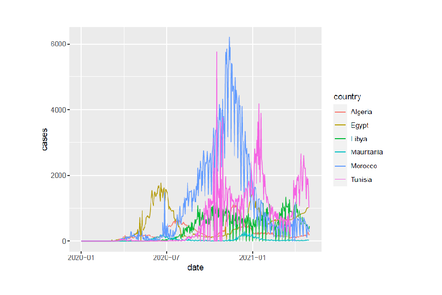
Session 3: Exploring, summarising and visualising your analysis dataset
Session 3 will cover: (1) building an analysis dataset, (2) filtering, grouping, and summarising data, (3) building presentation-ready tables in R, (4) creating graphs using 'ggplot2'
Week 2
Continuation of Introduction to Epidemiological Analysis

Session 4a: Creating maps using spatial data
Session 4a will cover: (1) different types of spatial data, (2) using R packages to work with vector and raster data, (3) creating static and interactive maps (4) applying layers on a map.

Session 4b: Producing maps using Nigeria CDC data and the ggplot function
Session 4b will cover how to produce maps using the ggplot function in R and focused on using Nigeria CDC data.

Session 4c: Optional maps training
Here you will find additional training on producing maps using the mapview package. This section is not mandatory and can be used to supplement your learning from Session 4a

Applied learning project
This is the last part of this course, and the aim here is to apply everything you have learned from sessions 1-4 by completing your own project.

End of course
Congratulations, you have completed the course! See below to fill out the post-course evaluation survey so we can learn what went well and what could improve.

Supporting documents
You can find supporting documents here.
When would you like to start?
Start straight away and join a global classroom of learners. If the course hasn’t started yet you’ll see the future date listed below.
Available now
Learning on this course
On every step of the course you can meet other learners, share your ideas and join in with active discussions in the comments.
What will you achieve?
By the end of the course, you‘ll be able to...
- Set up and run R
- Install and load up R packages
- Clean and manage messy datasets
- Summarise the cleaned analysis dataset
- Produce data visualisations e.g. epi-curves and maps
Who is the course for?
This is an introductory course for epidemiologists, surveillance analysts, statisticians, data scientists and similar professionals who work in surveillance, outbreak response or research areas with little to no previous experience in R.
Who will you learn with?
Who developed the course?

UK Health Security Agency
The UK Health Security Agency (UKHSA) is responsible for planning, preventing and responding to external health threats by providing intellectual, scientific and operational leadership at national and local level, as well as on the global stage. UKHSA is an executive agency, sponsored by the Department of Health and Social Care.

London School of Hygiene & Tropical Medicine
The London School of Hygiene & Tropical Medicine is a world leader in research and postgraduate education in public and global health. Its mission is to improve health and health equity worldwide.
Ways to learn | Buy this course | Subscribe & save | Start learning today |
|---|---|---|---|
| Choose the best way to learn for you! | $79/one-off payment | $335.99 for a whole year Automatically renews | Free |
| Fulfill your current learning need | Develop skills to further your career | Try this course - with limits | |
| Access to this course | tick | tick | Limited to 2 weeks |
| Access to 1,000+ courses | cross | tick | cross |
| Learn at your own pace | tick | tick | cross |
| Discuss your learning in comments | tick | tick | tick |
| Certificate when you're eligible | Printed and digital | Digital only | cross |
Cancel for free anytime |
Ways to learn
Choose the best way to learn for you!
Subscribe & save
$335.99 for a whole year
Automatically renews
Develop skills to further your career
- Access to this course
- Access to 1,000+ courses
- Learn at your own pace
- Discuss your learning in comments
- Digital certificate when you're eligible
Cancel for free anytime
Buy this course
$79/one-off payment
Fulfill your current learning need
- Access to this course
- Learn at your own pace
- Discuss your learning in comments
- Printed and digital certificate when you’re eligible
Start learning today
Free
Try this course - with limits
- Limited to 2 weeks
Find out more about certificates, Unlimited or buying a course (Upgrades) Sale price available until 2 November 2026 at 23:59 (UTC). T&Cs apply. | |||
Find out more about certificates, Unlimited or buying a course (Upgrades)
Sale price available until 2 November 2026 at 23:59 (UTC). T&Cs apply.
Learning on FutureLearn
Your learning, your rules
- Courses are split into weeks, activities, and steps to help you keep track of your learning
- Learn through a mix of bite-sized videos, long- and short-form articles, audio, and practical activities
- Stay motivated by using the Progress page to keep track of your step completion and assessment scores
Join a global classroom
- Experience the power of social learning, and get inspired by an international network of learners
- Share ideas with your peers and course educators on every step of the course
- Join the conversation by reading, @ing, liking, bookmarking, and replying to comments from others
Map your progress
- As you work through the course, use notifications and the Progress page to guide your learning
- Whenever you’re ready, mark each step as complete, you’re in control
- Complete 90% of course steps and all of the assessments to earn your certificate
Want to know more about learning on FutureLearn? Using FutureLearn
Do you know someone who'd love this course? Tell them about it...
You can use the hashtag #EpidemiologicalAnalysis to talk about this course on social media.
More courses you might like
Learners who joined this course have also enjoyed these courses.


Browse more in Healthcare & Medicine
