Global Ethics: An Introduction
Explore the key ethical theories surrounding global challenges and learn how philosophy can be used to address these problems.

Duration
4 weeksWeekly study
3 hours100% online
How it worksDigital upgrade
Free
Global Ethics: An Introduction
Widespread poverty, closed borders and catastrophic climate change
In our interconnected world, we face challenges that demand global solutions. But how do you find the right solutions?
On this course, you will use key ethical theories to examine the most important global issues of our time. What should be done about widespread poverty? Can it be right for countries to control migration and close borders? And what about climate change: Why care about preserving the world for future generations anyway?
Upon completing this course, you’ll be better equipped to think about and debate some of today’s most complex global ethical challenges.
Syllabus
Week 1
Global ethics Now


What on Earth is global ethics?
What do we mean by global ethics?

Issues in, and approaches to, global ethics
What are the issues in global ethics? What approaches do different people take to them? These are the questions we look at here.

Global ethics, justice and human rights
Here we introduce some basic concepts when thinking about key issues in global ethics.

Global ethics and moral theory
Here we briefly introduce two moral theories that are discussed in more detail later in the course.
Week 2
Global inequality

Introducing global inequality
According to the World Bank, 3.4 billion people, nearly half the world’s population, struggle to meet basic needs. So, while the world faces challenges looking to the future, there is nothing to be complacent about in the present.

Utilitarianism as a moral theory
Utilitarianism is a moral theory that we look at using an example from Peter Singer.

The example of Hardin’s raft
Does aid work? Can we really help without imperilling ourselves?
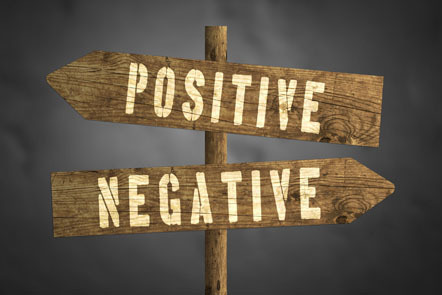
Common-sense morality: positive and negative duties
We explore common-sense morality as a series of positive and negative duties.

Complicity or benefit?
Are those who design, sustain and benefit from the global economic order to blame for harming the world's poor?
Week 3
Migration: Are controlled borders unethical?

Introducing migration
Every year, millions of people leave their home country and settle elsewhere. But why do people migrate?

The ethics of migration
Most countries control their borders. But, if all you want is to provide a more secure life for your family by migrating, this can seem very unfair. Is it ethical for countries to control their borders?

Utilitarianism and migration
According to utilitarianism, a policy is ethical only insofar as it has good consequences. So which has the better consequences: open borders or controlled borders?

Deontology and migration
According to deontology, whether something is ethical depends not on its consequences, but only on the rights and duties of those involved. Do countries have the right to control immigration?

Tax, benefits and migration
Having examined utilitarian and deontological arguments, we now turn to a more general, final argument.
Week 4
Climate change: Should we care for future generations?

Introducing the ethics of climate change
We have all heard that climate change is an important issue. But what exactly does it mean? And who or what is most affected by it? We examine some major ethical questions that confront us when we think about climate change.

Climate change: The facts and how we know them
What do we know about the effects and the causes of climate change? And how do we know that they are anthropogenic? We’ll first look at climate science and then ask what can be done about it.

Climate change as a ‘tragedy of the commons’
If we agree we are causing climate change, what stops us from addressing it effectively? Is it a ‘tragedy of the commons’ when rational, self-interested people fail to cooperate and lose out, as in the famous ‘prisoner’s dilemma’?

Should we really care about future generations?
Here we analyse two arguments: ‘non-existence’ and ‘non-identity’. Who gets affected by how present generations behave? Do we have ethical obligations to non-existing people? Do actions today affect future generations’ identity?

Who should pay for climate change, and the ‘afterlife’?
Following the arguments on our obligations to future generations, we discuss who should pay for climate change. We then consider one final argument to motivate those alive today to care more about the continuation of humanity.

Global ethical challenges
Having thought about different global ethical challenges, within this activity we will now explore the global challenges that you are most interested in.
When would you like to start?
Start straight away and join a global classroom of learners. If the course hasn’t started yet you’ll see the future date listed below.
Available now
Learning on this course
On every step of the course you can meet other learners, share your ideas and join in with active discussions in the comments.
What will you achieve?
By the end of the course, you‘ll be able to...
- Discuss key moral theories and apply them to important issues in global ethics.
- Explore and examine the global challenge of inequality, and appreciate its complexity.
- Apply and critically assess different arguments relating to the global challenge of migration.
- Demonstrate an understanding of the global challenge of climate change, and consider our obligations to future generations.
- Identify and use the concepts and methods of philosophy.
- Apply basic philosophical arguments.
- Identify and use key ethical concepts.
- Debate in a reasoned manner some of the most important questions of our time.
Who is the course for?
This course is for anyone interested in global ethics, or those considering further study in global challenges and philosophy.
What software or tools do you need?
There are no specific software requirements or tools needed to study this course.
Who will you learn with?

Manuel Dries is a UK Philosopher at The Open University and the University of Oxford. His research is in European Philosophy with a focus on contemporary Ethics, Philosophy of Mind, and Aesthetics.

I am a Lecturer in Philosophy at the Open University. I have ten years of teaching experience, across a wide range of topics including Metaphysics, Epistemology, Ethics and Political Philosophy.

I am a lecturer and Staff Tutor at the Open University in the UK. Here, and elsewhere, over the years I have taught a variety of topics in political, moral and social philosophy.

I'm a philosopher working in the department at the Open University: I work on political philosophy, and increasingly, the philosophy of sport. To be honest, I'm interested in just about everything.
Who developed the course?

The Open University
As the UK’s largest university, The Open University (OU) supports thousands of students to achieve their goals and ambitions via supported distance learning, helping to fit learning around professional and personal life commitments.
Established
1969Location
Milton Keynes, UKWorld ranking
Top 510Source: Times Higher Education World University Rankings 2020
What's included?
The Open University are offering everyone who joins this course a free digital upgrade, so that you can experience the full benefits of studying online for free. This means that you get:
Learning on FutureLearn
Your learning, your rules
- Courses are split into weeks, activities, and steps to help you keep track of your learning
- Learn through a mix of bite-sized videos, long- and short-form articles, audio, and practical activities
- Stay motivated by using the Progress page to keep track of your step completion and assessment scores
Join a global classroom
- Experience the power of social learning, and get inspired by an international network of learners
- Share ideas with your peers and course educators on every step of the course
- Join the conversation by reading, @ing, liking, bookmarking, and replying to comments from others
Map your progress
- As you work through the course, use notifications and the Progress page to guide your learning
- Whenever you’re ready, mark each step as complete, you’re in control
- Complete 90% of course steps and all of the assessments to earn your certificate
Want to know more about learning on FutureLearn? Using FutureLearn
Learner reviews
Learner reviews cannot be loaded due to your cookie settings. Please and refresh the page to view this content.
Get a taste of this course
Find out what this course is like by previewing some of the course steps before you join:

Do you know someone who'd love this course? Tell them about it...
More courses you might like
Learners who joined this course have also enjoyed these courses.


Browse more in Politics & Society
